
9 Best Bamboo Building Workshops in Asia (And How to Pick the Right One for You)
The global shift toward sustainable architecture has placed a massive spotlight on natural materials. At the forefront of this green revolution is bamboo. With its remarkable tensile strength, rapid renewability, and low carbon footprint, bamboo is rapidly moving from the fringes of eco-design to the center of global construction. Because of this, the demand for a sustainable building workshop Asia is higher than ever.
However, traditional architecture schools rarely teach natural material methodologies. If you want to learn how to properly treat, bend, and construct with this giant grass, you have to go to where it grows.
Asia is undeniably the global epicenter for bamboo education. But the landscape of bamboo training Southeast Asia offers is incredibly varied. From high-society architectural design programs in Bali to rugged, community-rooted farm builds in the Philippines and emerging biophilic projects in Sri Lanka, there is a course for every budget and goal.
Whether you are a professional architect, a permaculture student, or a gap year traveler looking for a meaningful skill, here are the 9 best bamboo building workshops in Asia for 2026—and exactly how to choose the right one for you.
What are the best bamboo workshops in Asia?
The best bamboo building workshops in Asia include Bamboo U in Bali for high-end architectural design, Bamboo Bootcamp in the Philippines for affordable, community-rooted supply chain training, and Baan Din Doi in Thailand for intimate natural building retreats. The right choice depends entirely on your budget, your desire for indigenous integration, and whether you are a professional designer or a beginner.
How to Evaluate a Bamboo Building Workshop
Before diving into the list, you must know how to evaluate a program. Not all bamboo course Bali options or eco building workshop Asia programs are created equal. Look for these four critical pillars:
- Supply Chain Comprehensiveness: Does the course just hand you pre-cut poles, or does it teach you clump management, harvesting, and crucial post-harvest preservation? Untreated bamboo rots; a good course teaches you how to make it last over 50 years.
- Hands-on vs. Theory: Some courses are essentially architectural lectures with light model making. Others are grueling, 10-hour days of physical labor on a real construction site.
- Community Integration: Does the tuition support an international corporation, or does it directly empower local, indigenous communities who use bamboo for their daily livelihood?
- The Final Output: Do you leave with a sketchbook of ideas, or do you physically contribute to a full-scale, standing structure?
The 9 Best Bamboo Building Workshops in Asia
1. Bamboo U (Bali, Indonesia) – The Prestige Choice
When people think of a bamboo architecture course, they usually think of Bamboo U. Run in partnership with the globally celebrated design firm IBUKU and located near the iconic Green School Bali, this is the premier destination for high-end bamboo design education.
- The Experience: The 11-day immersion is heavily focused on design thinking, structural engineering principles, and organic architecture. Instruction is led by globally connected architects and master Balinese carpenters.
- Best For: Architects, engineers, and designers who want international prestige, a powerful professional network, and budget is not a primary constraint.
- Cost: $2,775 USD (plus flights and travel insurance, totaling ~$3,500–$5,000+).
2. Bamboo Bootcamp (Davao City, Philippines) – The Community Choice
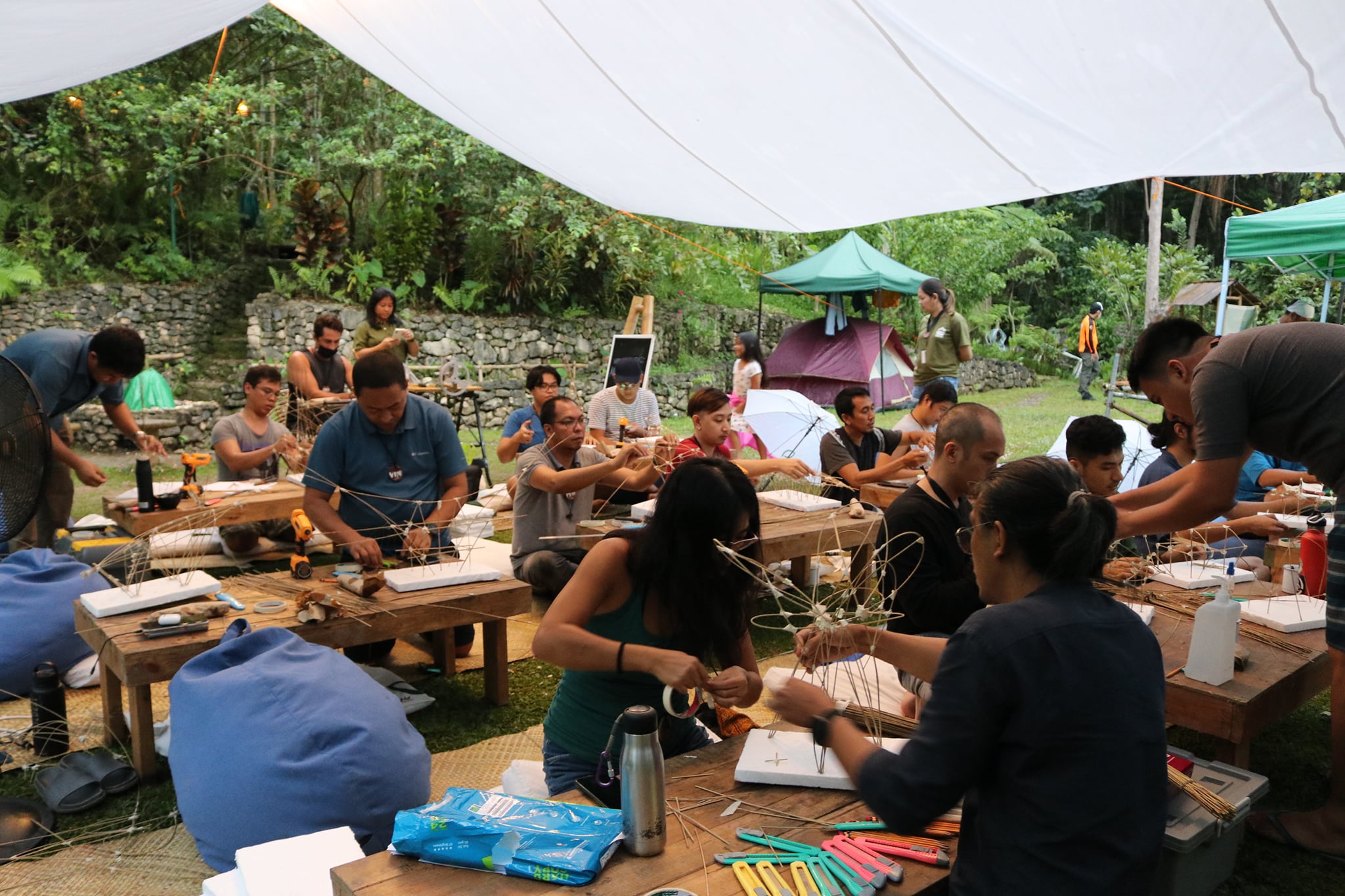
If Bamboo U is about bamboo as high design, Bamboo Bootcamp is about bamboo as a living, working solution for communities and livelihoods. Located at Hayag Farm School in Mindanao, this is arguably the most authentic, hands-on eco construction course in the region.
- The Experience: Over 10 days and 5 modules, students learn the full Philippine supply chain—from propagation and treatment to Filipino carpentry. Crucially, the program is grounded in a partnership with the Matigsalug Tribe, offering a rare integration of indigenous knowledge. You go from a scale model to a standing structure.
- Best For: Beginners, gap year travelers, sustainability advocates, and budget-conscious learners who want real-world, community-rooted building experience.
- Cost: P45,000 (approximately $780 USD), which is all-inclusive of dorm accommodation and 5 meals/snacks daily.
3. Bamboo Creative Bali (Bali, Indonesia) – The Affordable Internship
For those who want to be in Bali but cannot afford the Bamboo U premium, Bamboo Creative Bali offers a fantastic alternative. They focus heavily on making sustainability accessible to all, with a strong emphasis on eco-tourism and domestic applications.
- The Experience: They offer everything from 3-week intensives to 3-month (50-day) comprehensive internships. Their curriculum uniquely integrates bamboo with other eco-materials like EcoBricks and clay-straw infill, and teaches affordable Vertical Soak Diffusion (VSD) treatment methods.
- Best For: Long-term travelers, digital nomads, and builders looking for an extended, highly affordable mentorship program in Indonesia.
4. Baan Din Doi Natural Building (Chiang Rai, Thailand) – The Intimate Retreat
Tucked away in the mountains of Northern Thailand, Baan Din Doi is a learning center focused on earth and bamboo architecture.
- The Experience: Their 5-day bamboo building workshop is incredibly intimate, strictly limited to just 6 participants per cohort. Guided by experienced natural builders, students learn to confidently select, treat, and assemble bamboo, culminating in a real roof extension or pergola for an on-site earth building.
- Best For: Introverts, absolute beginners, and nature lovers who want a quiet, personalized, and peaceful learning environment.
5. Studio WNA Workshops (Bali, Indonesia) – The Architectural Consultancy
Studio WNA is a Bali-based architecture consultancy that occasionally opens its doors to share its practical knowledge with the public.
- The Experience: Rather than a continuous farm school, these are specialized workshops hosted by practicing architects. They cover bamboo planting, preservation, scaled model making, and hands-on construction techniques.
- Best For: Architecture students and professionals who want technical, consultancy-level insights into how a working design firm operates in the tropical bamboo space.
6. The Tipi Bamboo Internship (Koh Phangan, Thailand) – The Island Builder
Located on the famous island of Koh Phangan, The Tipi offers bamboo building workshops and extended internships that blend island life with hard construction skills.
- The Experience: Participants are integrated directly into the design process of the center. The curriculum covers everything from cleaning and preserving bamboo to crafting furniture and merging “traditional” and “modern” building techniques.
- Best For: Backpackers and gap year travelers who want to combine a Thai island experience with hands-on, practical eco-construction skills.
7. Sahai Nan Organic Permaculture Farm (Northern Thailand) – The Permaculture Integration
Sustainable building does not exist in a vacuum; it is part of a broader ecosystem. Sahai Nan is an off-grid farmstay that teaches bamboo construction as a pillar of permaculture.
- The Experience: Learning here is based on real-life survival and farm projects. A bamboo course is often integrated with natural building, weaving, and organic food forest management.
- Best For: Hardcore permaculture students and those looking for a rugged, off-grid survivalist approach to natural materials.
8. Tâboo Bamboo Workshop (Hoi An, Vietnam) – The Craft Introduction
Not everyone has 10 days to dedicate to a full-scale architectural build. For travelers moving quickly through Vietnam, the Tâboo Bamboo Workshop offers a perfect micro-introduction.
- The Experience: This is a half-day (roughly 4-hour) cultural immersion. Participants learn about traditional Vietnamese bamboo houses, the village’s specific wood-treatment techniques, and get hands-on experience crafting a small, personalized souvenir or basket.
- Best For: Families, casual tourists, and time-strapped travelers wanting a brief, meaningful cultural exchange.
9. Atelier Nomadic / Emerging Sri Lanka Workshops (Sri Lanka) – The Biophilic Frontier
While Southeast Asia has traditionally dominated the bamboo scene, Sri Lanka is rapidly emerging as a hotspot for biophilic architecture.
- The Experience: Pioneered by architects like Olav Bruin (who designed the incredible bamboo grid shell domes for Wild Coast Lodge), Sri Lanka is seeing a surge in localized bamboo training. While formal, year-round schools are still developing, specialized masterclasses and eco-resort build internships are becoming increasingly available for those willing to seek them out.
- Best For: Trailblazers and experienced builders looking to apply engineered bamboo concepts in new, emerging markets.
Cost Comparison Table: Finding Your Fit
Workshop / Program | Location | Duration | Est. Course Cost | Best For |
Bamboo U | Bali, Indonesia | 11 Days | $2,775 USD | High-design professionals |
Bamboo Bootcamp | Davao City, Philippines | 10 Days | ~$780 USD (P45,000) | Budget learners & indigenous focus |
Baan Din Doi | Chiang Rai, Thailand | 5 Days | ~$300 USD | Intimate, small-group retreats |
Bamboo Creative | Bali, Indonesia | 3 Weeks | ~$600 USD | Long-term budget internships |
Tâboo Workshop | Hoi An, Vietnam | Half-Day | ~$50 USD | Casual tourists and families |
(Note: Prices fluctuate based on exchange rates and specific accommodation tiers. Always verify on the official websites.)
Which is Right for You?
Best for Beginners
If you have never touched a power tool, do not be intimidated. Programs like Bamboo Bootcamp are explicitly open to anyone with a love for sustainability, requiring zero prior experience. Baan Din Doi in Thailand is also exceptionally welcoming, offering a very small class size (6 people) that ensures you won’t get left behind.
Best for Professionals
If you are a licensed architect seeking international credentials and a portfolio boost, Bamboo U is unmatched. The premium price tag grants you access to the IBUKU methodology and a global network of high-end eco-designers. However, if you are a professional who specifically wants to understand affordable, community-level supply chains, Bamboo Bootcamp offers a radically different, equally valuable type of professional development.
How to Book
Most comprehensive courses run only a few cohorts per year, aligning with the dry season and bamboo harvesting schedules. Because class sizes are kept small to ensure safety on the build site, they sell out months in advance.
- To book Bamboo Bootcamp (Philippines), visit bamboobootcamp.org.
- To book Bamboo U (Bali), visit bamboou.com.
Frequently Asked Questions
Where is the best place to learn bamboo building in Asia?
The “best” place depends on your goals. Bali (Indonesia) is the global hub for luxury bamboo design and architecture. The Philippines is the best destination for affordable, community-rooted, hands-on supply chain training. Thailand excels at integrating bamboo into broader permaculture and off-grid farming courses.
Is Bali or the Philippines better for bamboo workshops?
If you want to design luxury eco-resorts and network with international architects, Bali (Bamboo U) is better. If you want to learn practical Filipino carpentry, Matigsalug indigenous knowledge, and hands-on building at a fraction of the cost, the Philippines (Bamboo Bootcamp) is the better choice.
What is the most affordable bamboo building course in Southeast Asia?
Bamboo Bootcamp in Davao City is one of the most affordable comprehensive courses, costing approximately $780 USD (P45,000) for a full 10-day, all-inclusive program covering accommodation, meals, materials, and training.
How long does a bamboo building course usually take?
Micro-workshops (like those in Vietnam) take a few hours. Intimate retreats (like Baan Din Doi in Thailand) take about 5 days. However, a comprehensive, full-scale structural build course typically requires 10 to 11 days of intensive, full-time participation.
Do I need to be an architect to attend?
No. While some high-end courses cater heavily to design professionals, many programs—including Bamboo Bootcamp and various permaculture farms in Thailand—are explicitly open to complete beginners, farmers, gap year travelers, and enthusiasts.
Will these courses teach me how to treat bamboo so it doesn't rot?
Yes. Any reputable course will have a dedicated module for post-harvest treatment. You will learn drying and preservation techniques that can extend the lifespan of your bamboo structures well beyond 50 years.
Do I need to bring my own tools?
No. Whether you are building in Bali, Thailand, or the Philippines, all established programs provide the necessary local carpentry tools, bamboo materials, and safety equipment for the duration of the course.
Is accommodation included in the price?
It varies by program. Bamboo U and Bamboo Bootcamp both offer all-inclusive pricing that covers your on-site dorm accommodation and meals. Other independent internships may require you to source your own local lodging.
Can I get a certificate for completing a bamboo course?
Yes. Major programs like Bamboo Bootcamp and Bamboo U issue formal certificates of completion that recognize your practical training and hours spent mastering the material.
Are there any online bamboo building courses?
Yes. Organizations like Bamboo U offer separate online courses focusing on engineering and design theory. However, you cannot learn the physical tactile skills—like joinery and material handling—through a screen.
What is the difference between an internship and a workshop?
Workshops are typically structured, short-term courses (5–11 days) with a set curriculum and a guaranteed final output. Internships (like those offered by Bamboo Creative Bali or The Tipi) are usually longer (3 weeks to 3 months) and involve assisting ongoing, fluid construction projects.
Why is indigenous knowledge important in bamboo construction?
Bamboo is an organic material that behaves differently than steel or standardized timber. Indigenous communities, such as the Matigsalug Tribe in the Philippines, possess centuries of generational knowledge on how to harvest, bend, and bind bamboo effectively—knowledge that modern engineering is only just beginning to catch up with.
Are these courses physically demanding?
Yes. A hands-on building workshop is a physical construction site. You will be measuring, cutting, lifting, and working outdoors in a tropical climate for 8 to 10 hours a day.
What should I pack for a sustainable building workshop Asia trip?
You should pack sturdy work clothes, closed-toe shoes suitable for construction, heavy-duty sun protection, tropical insect repellent, and a reusable water bottle.
Can bamboo really replace steel and concrete?
In many structural applications, yes. Bamboo has a higher tensile strength than many alloys of steel and a significantly lower environmental impact, making it a vital material for the future of sustainable green building training in Asia.