

Filipino Carpentry: Traditional Bamboo Joinery Techniques Every Builder Should Know
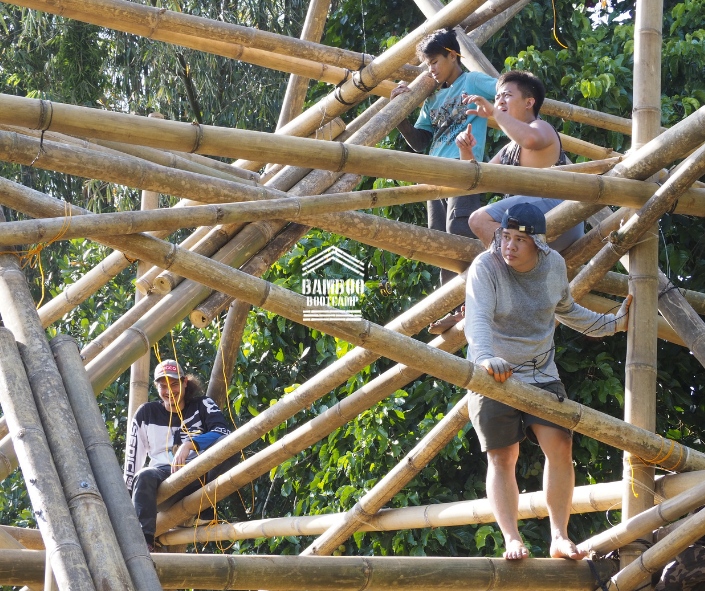
If you take a standard western carpenter—someone who has spent decades framing houses with square, solid pine and pneumatic nail guns—and hand them a bamboo pole, they will likely struggle.
Bamboo is a fundamentally different beast. It is a hollow cylinder. It tapers from the base to the tip. And most importantly, its longitudinal fibers are incredibly strong but highly prone to splitting. If you try to drive a standard steel nail into a raw piece of bamboo, the entire pole will often crack straight down the middle, instantly destroying its structural integrity.
Because standard timber joinery does not work on bamboo, builders must look to the regions that have been mastering this grass for centuries. In the Philippines, indigenous builders and traditional carpenters have developed highly specialized, incredibly resilient joinery techniques. These methods do not fight the bamboo’s natural properties; they work in harmony with them.
Whether you are building a simple backyard pergola or designing the sweeping roofline of a luxury tropical event space, understanding these traditional Filipino joinery techniques is essential.
The Anatomy Rule: It’s All About the Node
Before making a single cut, a builder must understand the anatomy of the material. Bamboo consists of hollow sections called internodes and solid, horizontal dividers called nodes.
The hollow internode gives bamboo its flexibility and lightness, but it can be easily crushed if squeezed. The solid node is where the bamboo’s compressive strength lies. The golden rule of traditional bamboo carpentry is that all major structural joints, drill holes, and load-bearing connections must occur in or immediately adjacent to a node. ### 3 Essential Bamboo Joinery Techniques
1. The Fish Mouth Joint (Boca de Pescado / Saddle Joint)
This is arguably the most iconic and essential joint in bamboo construction, used whenever a vertical post must support a horizontal beam.
Because you are connecting two cylinders, a flat cut will slip and roll. Instead, the top of the vertical post is meticulously carved out into a deep “U” shape—resembling an open fish mouth—that perfectly matches the curve of the horizontal beam resting inside it.
In traditional Filipino carpentry, this requires immense precision with a hand saw and a specialized carving knife or chisel. When executed correctly, the horizontal beam sits flush inside the vertical post, transferring the immense weight of the roof directly down through the strong vertical fibers without crushing the hollow tube.
2. Bamboo Pegging (The Dowel Joint)
Western building relies heavily on steel bolts and screws. In traditional bamboo construction, introducing rigid steel is often a mistake. Metal rusts in tropical humidity, and more importantly, steel does not flex. When high winds hit a structure, the bamboo wants to sway; if it is bolted tight with steel, the friction will tear the bamboo fibers apart.
Instead, traditional builders use bamboo pegs or dowels.
A hole is drilled through both pieces of intersecting bamboo (always at the node). A custom-carved bamboo peg—made from the dense, strong outer wall of an older pole—is then hammered through the hole. Because the peg and the post are made of the exact same organic material, they expand, contract, and flex together in the weather, creating an incredibly resilient, earthquake-resistant connection.
3. Traditional Lashing and Binding
Even with a perfect fish mouth joint and a sturdy bamboo peg, a joint is not complete without tension. Traditional structures rarely rely on the peg alone to hold a structure together. They rely on tightly woven lashing.
Historically, builders in the Philippines utilized rattan or split bamboo strips to bind joints tightly together. Today, many builders use highly durable synthetic ropes, but the traditional knotting techniques remain the same. The lashing wraps around the intersecting poles, pulling them violently together. This friction prevents the horizontal beams from shifting, rolling, or lifting off the vertical posts during high winds.
Why Planners and Designers Need to Know This
You might think that joinery is purely the contractor’s problem, but in biophilic architecture, the structure is the aesthetic.
When conceptualizing high-end hospitality venues—such as the sweeping, pillar-free pavilions popular in Ubud’s event spaces, or a luxury tropical pool lounge—these connections cannot be hidden behind drywall. The lashing, the pegging, and the precise curves of the fish mouth joints are entirely exposed. They become a core visual element of the space’s design.
If a space planner or architect does not understand how these joints function, they will design structures that are physically impossible to build. Understanding the limits of traditional joinery is what allows a stunning architectural sketch to become a safe, standing reality.
Where to Learn Traditional Joinery
You cannot master the fish mouth joint by watching a video. Carving bamboo requires tactile feedback. You have to feel the density of the fiber under your chisel and learn exactly how much pressure to apply before the culm splits.
If you are serious about learning these skills, you need hands-on training from the people who pioneered them. Programs like Bamboo Bootcamp in the Philippines partner directly with indigenous knowledge-holders, such as the Matigsalug Tribe, to teach these exact traditional Filipino carpentry methods on a real build site.
Ready to get your hands dirty?
Read our [Ultimate Guide to Bamboo Building Courses] to explore how you can learn these traditional techniques in person, compare the top programs in Asia, and find the perfect workshop to master the art of sustainable construction.