
Ditching the Desk: Why Gap Year Students are Choosing Hands-On Eco-Construction
For decades, the “gap year” formula was highly predictable. A burned-out high school graduate or university student would pack a massive backpack, fly to Southeast Asia, and spend six months hopping between hostels, drinking out of neon buckets on the beach, and taking the exact same photos at the exact same temples.
But a massive cultural shift is happening.
Today’s generation of travelers is rejecting the superficial backpacker trail. Having spent their formative years trapped behind glowing screens, navigating remote learning, and staring down a future of desk jobs, they are craving something entirely different. They do not just want to see the world; they want to build it.
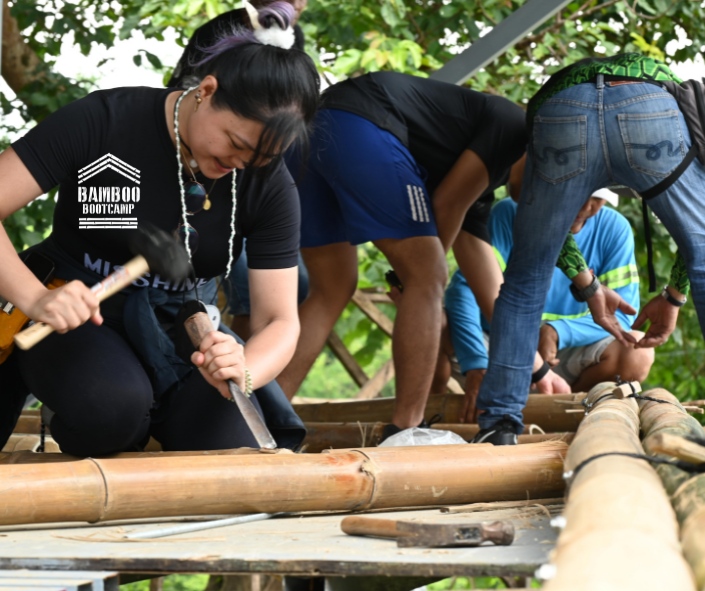
Instead of passive tourism, gap-year students and digital nomads are increasingly flocking to hands-on eco-construction courses. They are trading their laptops for chisels, trading resort pools for muddy farm sites, and choosing to master sustainable materials like structural bamboo.
Here is why the modern gap year is ditching the desk for the build site, and why hands-on eco-construction in places like the Philippines is becoming the ultimate rite of passage.
1. The Death of Superficial "Voluntourism"
The desire to “give back” while traveling is not new. But for years, the travel industry capitalized on this through “voluntourism”—highly commercialized programs where young travelers paid thousands of dollars to paint a fence that didn’t need painting, or lay bricks for a week in a village they knew nothing about. These programs often disrupted local economies, took jobs away from local laborers, and provided zero lasting impact.
Modern gap-year students are highly educated on the ethics of travel. They see right through the voluntourism trap.
They are instead seeking ethical skill exchanges. When a traveler enrolls in a community-rooted eco-construction course—like the Bamboo Bootcamp at Hayag Farm School in Mindanao—they are not pretending to be a savior. They are paying to be a student. Their tuition directly supports the local ecosystem and indigenous knowledge-holders (like the Matigsalug Tribe), and in return, they are taught generationally proven, highly practical Filipino carpentry skills. It is an honest, equitable exchange of value that leaves the traveler with real skills and the community with real economic support.
2. The Craving for Tangible, Tactile Reality
We live in a deeply digital, abstract world. We send emails, build spreadsheets, and manage digital projects, but at the end of the day, there is very little physical proof that we actually did anything.
For a young adult preparing to enter the modern workforce, this lack of tangible output is exhausting. Eco-construction offers the ultimate antidote.
A bamboo building course is intensely physical. Over the span of 10 days, a student goes from looking at a raw, 6-meter-long piece of giant grass to learning how to harvest it, treat it with borax, carve a complex “fish mouth” joint, and hoist it into the air.
At the end of the program, they can stand inside a full-scale structure and say, “I built that with my own hands.” That level of physical, tactile accomplishment is profoundly empowering. It builds a type of deep, quiet confidence that cannot be earned in a classroom or a corporate internship.
3. The "Backpacker Budget" Reality
In the past, learning specialized eco-architecture was largely reserved for elite designers who could afford premium tuitions. Programs in high-end tourist hubs like Bali often charge upwards of $2,775 USD for a week and a half of instruction. For a backpacker trying to stretch their budget across six months, that price is a hard stop.
But the emergence of grassroots programs has democratized this education.
The Philippines has rapidly become the go-to destination for budget-conscious learners. Programs like Bamboo Bootcamp offer an intensive 10-day, all-inclusive immersion for just P45,000 (approximately $780 USD). This fee includes the training, all materials, dorm-style accommodation, and five meals a day.
For a gap-year student, spending under $800 to gain a lifelong, highly marketable skill while being fully housed and fed for 10 days is an absolute no-brainer. It aligns perfectly with the backpacker budget while offering infinitely more value than spending that same money at a string of beach bars.
4. Real Cultural Immersion (Beyond the Hostel Bubble)
It is incredibly easy to travel across Southeast Asia for six months and only ever speak to other Western backpackers. The “hostel bubble” is comfortable, but it completely insulates you from the reality of the country you are visiting.
An eco-construction course forces you out of that bubble and directly into the heart of the community.
When you spend 10 days on a working farm in Davao City, you are not just a tourist. You are sweating alongside local farmers who are learning how to propagate bamboo as a cash crop. You are sharing meals with indigenous Matigsalug builders who are teaching you how to read the lunar cycle for harvesting. You are collaborating with local government officials exploring sustainable infrastructure.
This level of authentic, uncurated cultural immersion simply cannot be bought on a standard tour package. It changes the way young travelers view global communities, shifting their perspective from consumption to collaboration.
5. Building a Resume While Traveling
A gap year used to be viewed by traditional employers as a “hole” in a resume—a year of doing nothing. Today, students are using eco-construction to turn their gap year into a massive professional advantage.
A certificate in hands-on bamboo construction proves to future employers or university admissions boards that you are proactive, capable of managing complex physical projects, and deeply committed to global sustainability.
Whether a student plans to enter architecture, environmental science, NGO management, or even commercial real estate, understanding the realities of the sustainable supply chain puts them leaps and bounds ahead of their peers who only studied theory. They return from their travels not just with a tan, but with a highly specialized, in-demand technical skill.
Leave the Laptop, Pack the Work Boots
The era of passive travel is ending. The next generation wants to get their hands dirty, learn how the physical world works, and support ethical, regenerative communities while doing it.
If you are planning your 2026 gap year or career break and want to return home with more than just photographs, it is time to step onto the build site.
Ready to plan your trip?
Before you book your flights, make sure you are choosing an ethical, high-value program that fits your budget. Read our [Ultimate Guide to Bamboo Building Courses] to compare the best programs in Asia, understand exactly what you will learn, and prepare for the ultimate hands-on adventure.