
10 Real Reasons to Attend a Bamboo Workshop in the Philippines (And What to Expect)
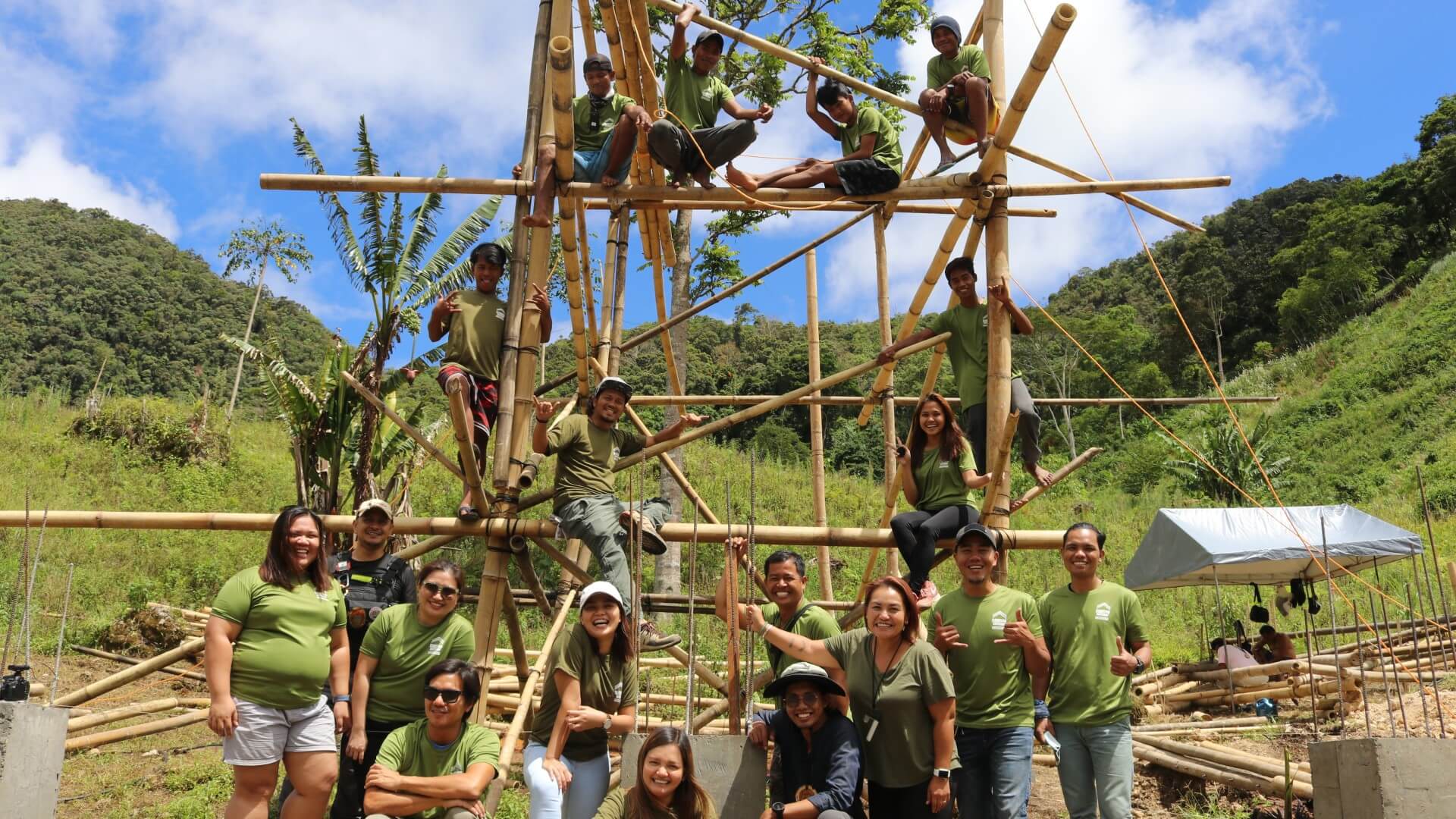
If you have been searching for a hands-on bamboo building course, you already know that Southeast Asia is the global epicenter for this kind of education. For years, the conversation has been dominated by high-end, design-led programs in Bali, Indonesia. But recently, a shift has occurred. Gap year travelers, budget-conscious learners, sustainability seekers, and even professional architects are increasingly looking toward the Philippines.
Why the shift? Because while Bali offers prestige and high design, the Philippines offers something raw, grounded, and deeply rooted in community livelihood. A bamboo workshop in the Philippines is not merely a design studio; it is a full immersion into the realities of sustainable construction.
If you are considering enrolling in a program like Bamboo Bootcamp’s 10-day Bamboo Building Fundamentals course at Hayag Farm School, you are likely wondering what the day-to-day experience actually looks like. Here is a deep dive into the 10 real reasons to attend a bamboo workshop in the Philippines—and exactly what you can expect when you get there.
What is a bamboo workshop in the Philippines?
A bamboo workshop in the Philippines is an immersive, site-based training program that teaches the full bamboo supply chain. Programs like Bamboo Bootcamp take participants through a 10-day, 5-module curriculum covering everything from propagation and post-harvest treatment to Filipino carpentry and scale modeling. The course is deeply integrated with indigenous knowledge, culminating in the hands-on construction of a full-scale standing structure.
1. The Deep Roots: Indigenous Knowledge and the Matigsalug Tribe
Perhaps the single most compelling reason to choose the Philippines for your bamboo education is the integration of genuine indigenous knowledge. At Bamboo Bootcamp, the curriculum is built around a partnership with the Matigsalug Tribe.
The Matigsalug are an indigenous community of Mindanao. For them, bamboo is not a passing architectural trend or a novel material discovered by modern sustainability advocates; it is a foundational element of their culture. They possess generational expertise in using bamboo as both a building material and a vital source of livelihood.
When you attend this workshop, the Matigsalug community’s relationship with bamboo is not just a bullet point on a syllabus—it is the lived, breathing context of the entire course. You are learning construction approaches that are firmly rooted in traditions that have sustained communities across Mindanao for centuries. This level of cultural integration provides an authenticity that simply cannot be replicated in a commercial design studio or any Bali-based program.
2. Radical Affordability: Redefining the Cost of Eco-Education
Sustainable education should be accessible, yet many global programs price out the very people who could benefit from them most. This is where the Philippines radically disrupts the market.
Let’s look at the numbers. The highly respected Bamboo U course in Bali is priced at $2,775 USD for an 11-day program. Once you factor in flights and travel insurance, international students often spend between $3,500 and $5,000 to attend.
In stark contrast, Bamboo Bootcamp’s Bamboo Building Fundamentals course costs just P45,000—which translates to approximately $780 USD at current exchange rates. This is not a bare-bones fee. It is entirely all-inclusive, covering the full 10-day course, all construction materials, basic dorm-type lodging with clean bathrooms, and three square meals plus two snacks every single day.
For a student flying into Davao City, the total trip cost typically falls between $1,200 and $2,000. This represents potential savings of $2,000 to $3,000+ for a comparable hands-on training experience. For budget-conscious learners, gap year travelers, and sustainability advocates, this makes the Philippines the most compelling alternative in Asia.
3. The Complete Supply Chain: A Granular Look at the 5 Modules
Many construction courses teach you how to assemble pre-cut materials. A true Philippine bamboo workshop teaches you the material’s entire lifecycle. Over 10 days, Bamboo Bootcamp follows a rigorous 5-module progression.
Module 1: Bamboo Possibilities and Traditional Uses
Before you pick up a saw, you must understand the material. Module 1 dives into the history of bamboo and its traditional uses across the Philippines. You will explore the current direction of the bamboo industry, identifying optimal uses for different species and mapping out the future potential of bamboo as a global sustainability solution.
Module 2: The Science of Survival (Treatment & Preservation)
Untreated bamboo is basically food for insects. If you build with raw bamboo, your structure will rapidly decay. Module 2 is dedicated entirely to post-harvest treatment. You will get hands-on experience with different treatment methods, proper drying protocols, and preservation techniques. The goal of this module is to give you the practical knowledge necessary to extend the life of your bamboo structures beyond 50 years.
Module 3: Gravity and Imagination (Scaled Modeling Workshop)
You cannot force bamboo; you must design with its natural curves. In Module 3, participants step into the role of structural designers by building 3D scale models. This is a crucial step for testing structural ideas safely. By working in miniature, you discover both the immense design potential and the physical limitations of the material before you commit to a full-scale build.
Module 4: The Filipino Way (Carpentry & Furniture Prototyping)
This is where the tools come out. Module 4 provides direct, hands-on training in Filipino carpentry methods. You will learn how to properly handle specialized tools, execute complex joinery techniques, and apply these skills to furniture making. This module bridges the gap between raw construction and refined craftsmanship.
Module 5: The Final Test (On-Site Build Project)
The culmination of the 10 days. In Module 5, the cohort works together to take their scale model and turn it into reality. You will participate in an on-site build project, transitioning from theory to a standing structure and a major piece of furniture.
4. Location Matters: Hayag Farm School and Mindanao
The setting of your education dictates the tone of your experience. Bamboo Bootcamp takes place at Hayag Farm School, located in Brgy Baganihan, Davao City.
Davao is the gateway to Mindanao, a region renowned for its rich tropical ecosystems and incredible cultural diversity. Unlike a curated international design studio, Hayag Farm School is a real, working environment. You are immersed in a setting where bamboo is actively used for daily survival and economic stability. For learners who crave authentic community immersion alongside their education, the rugged, genuine farm experience of Davao offers something profoundly unique.
5. Open Access: A Course for Everyone
There is a misconception that you must be an engineer or an architect to learn bamboo construction. While programs like Bamboo U skew heavily toward design professionals with technical backgrounds, the Philippine approach is radically inclusive.
Bamboo Bootcamp is explicitly open to anyone with a love of bamboo and a commitment to sustainability. No prior experience is required to join. The course treats absolute beginners with the exact same seriousness as seasoned professionals. The cohort is wonderfully diverse: you will build alongside farmers looking to propagate bamboo, craftsmen expanding their skills, arts and crafts enthusiasts, entrepreneurs, and local government units exploring new industry opportunities.
6. Bridging the Gap: Real-World Livelihood Applications
In the Philippines, bamboo is a livelihood solution. While high-end courses focus on bamboo as a “design trend” or “high design,” Bamboo Bootcamp focuses on bamboo as a living, working solution for communities and sustainable ecosystems.
This means the skills you learn are highly practical. Farmers learn how to grow and harvest it; entrepreneurs learn how to treat and monetize it; builders learn how to construct safe, lasting homes with it. It is an education grounded in utility.
7. The Hands-On Reality of Site-Based Learning
If you prefer sitting at a desk taking notes, this is not the course for you. The 10-day Bamboo Building Fundamentals course is formatted entirely around doing.
Participants spend the vast majority of their time outside, on-site, working directly with the material. Under the guidance of trained educators, community builders, and skilled instructors, you are constantly moving, measuring, cutting, and lifting. It is a physical, demanding, and incredibly rewarding process that builds muscle memory alongside intellectual understanding.
8. Building Connections: The Cohort and the Community
When you live and work on a farm with a group of people for 10 days, you forge fast, deep connections. The shared dorm accommodation and communal meals at Hayag Farm School foster an intimate environment. You are not just networking with other international travelers; you are building alongside members of the local community and indigenous knowledge-holders. You leave with real skills, but also with real connections to a global and local network of sustainability advocates.
9. Ethical Alignment with the 17 UN SDGs
Modern travelers and learners are increasingly conscious of where their money goes. By attending a community-rooted program in the Philippines, you are ensuring your tuition supports an ethical ecosystem. Bamboo Bootcamp operates in a way that fulfills the 17 UN Sustainable Development Goals. Your participation directly supports a community where bamboo is a way of life, promoting sustainable cities, responsible consumption, and decent work and economic growth.
10. The Tangible Guarantee: A Standing Structure
Many workshops hand you a certificate (which Bamboo Bootcamp also does), but few guarantee that you will leave having built a building. The promise of the Philippine bamboo workshop is highly tangible. Because of the intensive format, you will go from holding a scale model in your hands to standing inside a full-scale structure that you helped construct. That physical, standing proof of your new skills is the ultimate graduation gift.
What to Pack for Hayag Farm School
Preparing for 10 days of physical labor in Davao City requires the right gear. Because all tools, safety equipment, and bamboo materials are provided on-site, you only need to worry about your personal comfort and safety.
If you are attending the course, be sure to bring:
- Sturdy work clothes: Items you don’t mind getting dirty, sappy, or torn.
- Closed-toe shoes: Essential for construction site safety.
- Sun protection: Hats, long sleeves, and sunscreen for long hours outdoors.
- Insect repellent: Crucial for a tropical farm environment.
- A strong work ethic: Bring a willingness to work hard with your hands.
Frequently Asked Questions About Bamboo Bootcamp
What is the most affordable bamboo building course in Asia?
Bamboo Bootcamp in the Philippines is widely considered one of the most affordable, comprehensive bamboo building courses in Asia. At P45,000 (roughly $780 USD), the fee includes your accommodation, all meals, materials, and the full 10-day hands-on curriculum. This offers exceptional value when compared to programs like Bamboo U in Bali, which costs $2,775 USD.
Can complete beginners join the course?
Yes, absolutely. The Bamboo Building Fundamentals course is explicitly open to anyone interested in sustainability, and no prior experience is required. The 5-module structure is specifically designed to take participants from zero knowledge to completing a standing structure over the 10 days. It welcomes everyone from gap year students and enthusiasts to farmers and entrepreneurs.
What is the Matigsalug Tribe's role in the program?
The Matigsalug Tribe is an indigenous community from Mindanao with generational knowledge of bamboo as a livelihood and building material. Bamboo Bootcamp operates within a community connected to this Matigsalug knowledge. Students learn Filipino construction techniques alongside these community-rooted knowledge-holders, giving the program a profound dimension of indigenous authenticity.
Does the curriculum cover bamboo treatment?
Yes. Module 2 of the program is entirely dedicated to post-harvest treatment. You will learn various treatment methods, as well as drying and preserving techniques required to prolong the life of the bamboo. Because properly treated bamboo can last over 50 years, this module equips you with the practical knowledge to apply these vital preservation methods yourself.
How do I travel to Bamboo Bootcamp?
The course is held at Hayag Farm School in Brgy Baganihan, Davao City. The nearest major airport is Francisco Bangoy International Airport in Davao City, which receives regular flights from Manila and other hubs. From the airport, ground transport to the farm school takes approximately 1 to 2 hours. The Bootcamp team can advise you on transport logistics once you enroll.
Will I get a certificate at the end?
Yes. All participants who successfully complete the 5-module Bamboo Building Fundamentals course will receive a certificate of completion from Bamboo Bootcamp.
Is this course good for professional architects?
While Bamboo U is often the default choice for architects seeking prestige and the IBUKU methodology, Bamboo Bootcamp is equally valuable for professionals seeking a different kind of development. Architects who want real, hands-on Philippine bamboo construction experience, deep knowledge of Filipino carpentry, and indigenous building context will find this program incredibly beneficial—at a fraction of the cost.
Ready to Build?
If you want the most grounded, accessible, and community-rooted bamboo building experience in Asia, the Philippines is calling. Over 10 days, you will gain real skills, forge real connections, and build a real structure.
To enroll in the next Bamboo Building Fundamentals course at Hayag Farm School, you can visit bamboobootcamp.org or email them directly.