

Designing Tropical Event Spaces: Why Bamboo is the Ultimate Biophilic Material
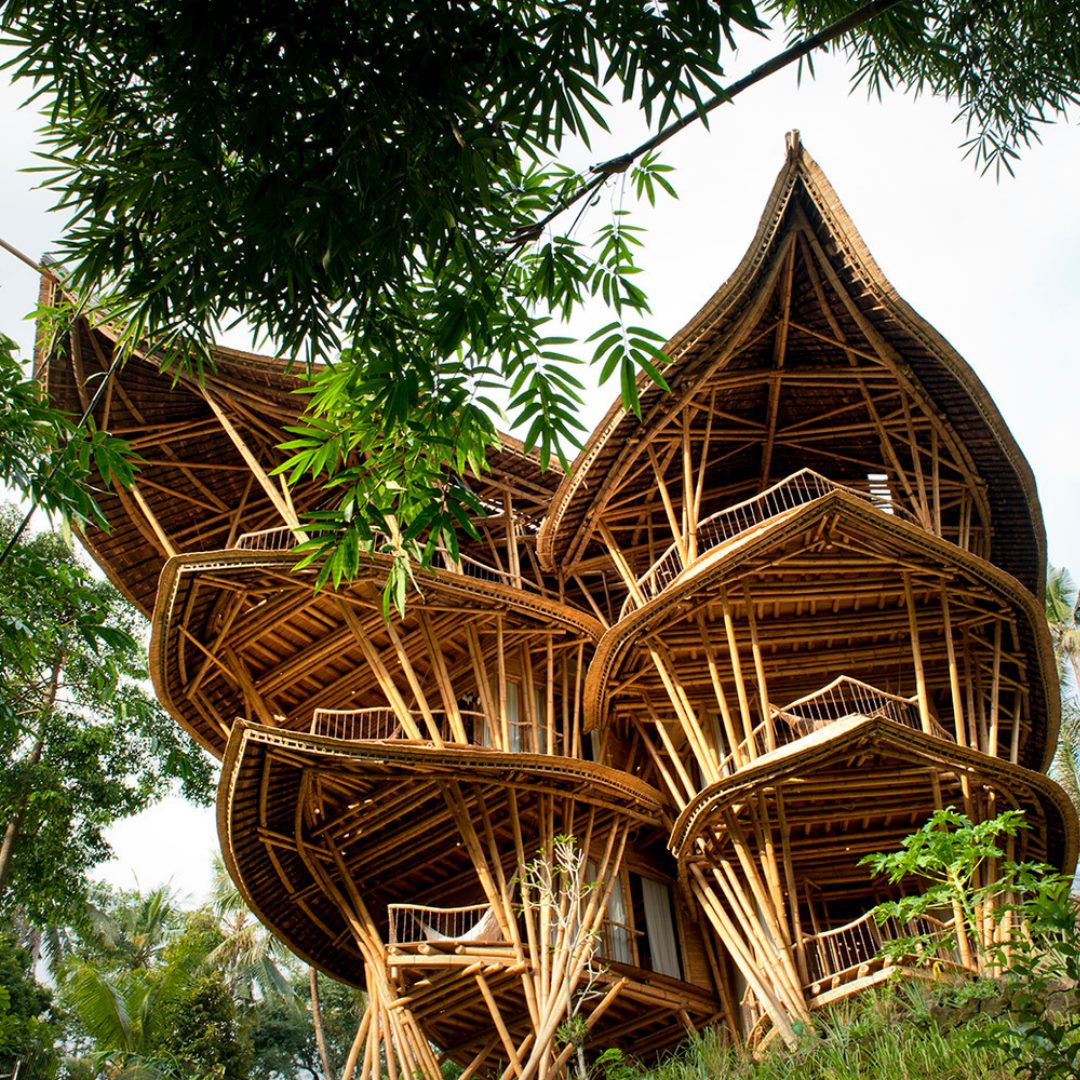
The hospitality and events industry is undergoing a profound aesthetic shift. Today’s guests are no longer impressed by sterile, air-conditioned concrete boxes. Whether they are attending a wellness retreat, a corporate summit, or a destination wedding, clients are seeking spaces that offer a deep, visceral connection to nature.
Enter biophilic design—the architectural practice of integrating natural elements into the built environment. And in the world of tropical commercial real estate, there is one material dominating the biophilic conversation: structural bamboo.
For interior designers, space planners, and commercial developers, mastering bamboo is rapidly becoming a non-negotiable skill. When conceptualizing a high-traffic restaurant, an immersive luxury pool lounge, or a sprawling yoga pavilion, bamboo offers structural and aesthetic advantages that traditional timber and steel simply cannot match.
Here is why bamboo is the ultimate biophilic material for designing unforgettable tropical event spaces—and why mastering it will set your design firm apart.
1. Structural Gymnastics: The Open Floor Plan
The primary challenge when designing an event space is sightlines. A premier venue cannot be interrupted by thick, load-bearing concrete pillars right in the middle of a dance floor, a dining room, or a stage.
Bamboo solves this through its incredible tensile strength. Because it is a hollow cylinder reinforced by solid nodes, structural bamboo can span massive distances without buckling.
By utilizing complex geometric forms—such as the sweeping, saddle-shaped hyperbolic paraboloid roofs—architects can create entirely open-air, pillar-free floor plans. Nowhere is this more apparent than in the thriving hospitality hubs of Ubud, Bali. A quick look at the websites for the most heavily booked event venues in the region reveals a common thread: massive, sweeping bamboo canopies that shelter hundreds of guests while remaining entirely open to the surrounding jungle.
2. Acoustic Dampening for High-Traffic Hospitality
One of the most overlooked aspects of space planning is acoustic control. Hard surfaces like glass, concrete, and steel reflect sound waves, creating a chaotic, echoing environment. In a bustling restaurant or an energized pool lounge, this leads to a deafening roar that ruins the guest experience.
Bamboo, by its very nature, diffuses sound. The organic, cylindrical shapes of the culms break up sound waves rather than bouncing them directly back into the room. When used as ceiling baffles, interior wall cladding, or suspended lighting fixtures, bamboo naturally warms the acoustics of a room, allowing for intimate conversations even in high-traffic venues.
3. The Psychology of the Organic Curve
Modern CAD software makes it very easy to design in straight lines and sharp 90-degree angles. But the human brain does not find sharp angles inherently relaxing.
Biophilic design relies on biomimicry—imitating the organic, fluid shapes found in nature. Bamboo must be manipulated along its natural curves. You cannot force it to be perfectly straight. This forces the designer to create archways, domed ceilings, and undulating rooflines that naturally lower a guest’s heart rate and induce a state of calm. For an event space—where the entire goal is to dictate the emotional state of the attendees—bamboo does the heavy lifting before the event even begins.
4. The Marketing Power of the Material
Beyond aesthetics, bamboo is a powerful branding tool. Consumers and corporate clients are increasingly demanding sustainable supply chains for their events.
A structure built from mature, properly treated bamboo acts as a carbon sink. It is rapidly renewable, growing to structural maturity in just 3 to 5 years, compared to the decades required for tropical hardwoods. When a venue is built from bamboo, the architecture itself becomes the core marketing pillar. It communicates a commitment to sustainability, eco-tourism, and environmental stewardship that resonates deeply with modern consumers.
Why Designers Cannot Just "Draw" Bamboo
Here is the catch: you cannot simply swap timber for bamboo in your architectural software and hand the blueprints to a standard contractor.
Bamboo tapers from base to tip. The distance between the nodes varies on every single pole. It requires highly specific joinery (because standard nails will split the hollow culm) and demands rigorous post-harvest treatment with borax to ensure it doesn’t succumb to powder-post beetles.
To successfully design a bamboo interior or a large-scale event venue, a space planner must intimately understand the material’s physical limitations and behaviors. You must know how far it can bend before snapping, how to design around its natural taper, and how to protect it from direct sun and rain.
The Next Step for Commercial Planners
If you want to integrate this incredible material into your commercial portfolios, you have to step away from the screen and learn how to physically manipulate it. Understanding the tactile reality of the material will fundamentally change how you draft your next hospitality project.
Ready to master the ultimate biophilic material?
Before you design your next venue, read our [Ultimate Guide to Bamboo Building Courses] to find the perfect hands-on training program. Whether you want the high-design prestige of Bali or the practical, community-rooted joinery of the Philippines, there is a course that will elevate your architectural practice.